线程池的设计
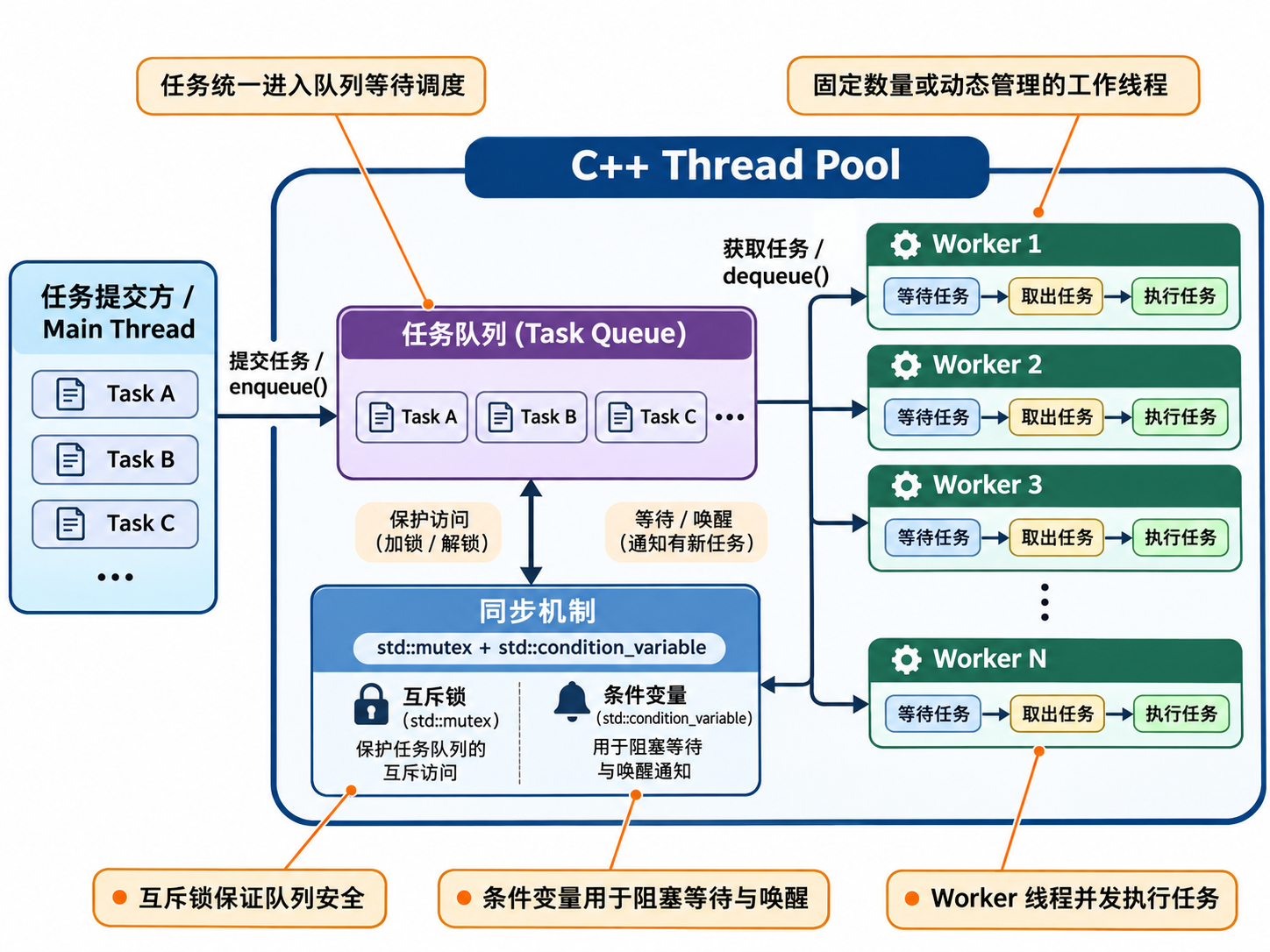
在设计一个线程池之前,我们首先需要了解线程池大概有哪些部分组成:
1- 首先肯定是要有一定数量的worker线程,这些线程负责执行任务。他们需要从一个任务队列中取取出一个任务,然后执行这个任务。
2- 其次是任务队列,用于存放待执行的任务,worker也可以从这里面取任务。
3- 合理的同步机制,发布任务的时候和执行任务的时候需要一定的同步机制。
以上大概就是一个简单的线程池的组成部分了,具体的示意如下:
具体实现如下,详细解释见注释
1
2
3
4
5
6
7
8
9
10
11
12
13
14
15
16
17
18
19
20
21
22
23
24
25
26
27
28
29
30
31
32
33
34
35
36
37
38
39
40
41
42
43
44
45
46
47
48
49
50
51
52
53
54
55
56
57
58
59
60
61
62
63
64
65
66
67
68
69
70
71
72
73
74
75
76
77
78
79
80
81
82
83
84
85
86
| #include <iostream>
#include <thread>
#include <mutex>
#include <vector>
#include <condition_variable>
#include <queue>
#include <string>
#include <chrono>
#include <functional>
class ThreadPool
{
public:
ThreadPool(int numThreads):stop(false){
for(int i=0;i<numThreads;i++)
{
threads.emplace_back([this](){
while(true)
{
std::unique_lock<std::mutex> lock(mtx);
condition.wait(lock,[this](){
return !tasks.empty() || stop;
});
if(stop && tasks.empty())
{
return;
}
auto task(std::move(tasks.front()));
tasks.pop();
mtx.unlock();
task();
}
});
}
}
~ThreadPool()
{
{
std::unique_lock<std::mutex> lock(mtx);
stop = true;
}
condition.notify_all();
for(auto& t : threads)
{
t.join();
}
}
template<typename F, typename... Args>
void enqueue(F&& f, Args&&... args)
{
std::function<void()> task = \
std::bind(std::forward<F>(f),std::forward<Args>(args)...);
{
std::unique_lock<std::mutex>lock(mtx);
tasks.emplace(std::move(task));
}
condition.notify_one();
}
private:
std::vector<std::thread> threads;
std::queue<std::function<void()>> tasks;
std::mutex mtx;
std::condition_variable condition;
bool stop;
};
void lockPrint(const std::string& info)
{
static std::mutex printMtx;
std::lock_guard<std::mutex> lk(printMtx);
std::cout<<info<<std::endl;
}
int main()
{
ThreadPool pool(4);
for(int i=0;i<10;i++)
{
pool.enqueue([i]{
lockPrint("task "+std::to_string(i)+" running");
std::this_thread::sleep_for(std::chrono::seconds(2));
lockPrint("task "+std::to_string(i)+" done");
});
}
}
|